
The short answer
If your AC is failing often, can't keep up on hot days, or you're adding cooling for the first time, a new installation may be the right move. We inspect your home, ductwork and electrical setup, explain whether repair or replacement makes more sense, and size a system to fit your house.
A new air conditioner is a big decision, and the right system depends on your home, not a sales script. Ozone Heating & Cooling installs central air conditioners and heat pumps for homeowners in Fremont, Newark, Union City, Milpitas and surrounding communities. Summers here are dry, and inland parts of the area run noticeably hotter than neighborhoods near the Bay. A system sized and installed for your specific house will keep you comfortable without running harder than it needs to. This page covers when installation makes sense, what we look at, your options, and what to expect when we visit.
Signs It May Be Time for a New AC
Some problems can be fixed with a repair. Others point to a system that has reached the end of its useful life, or a home that never had the right equipment in the first place.
- Your system needs repairs again and again, especially for major parts like the compressor
- Some rooms stay warm while others get cold, even with the thermostat set correctly
- The unit runs constantly on hot afternoons and still can't reach the set temperature
- Your energy bills keep climbing even though your habits haven't changed
- The system uses an older refrigerant that is getting harder to service
- You have no central cooling and want to add it, or you're replacing an aging furnace and considering a heat pump
What We Check Before Recommending a System
We don't size a system by guessing from square footage alone. A proper recommendation starts with how your home actually gains and holds heat.
- Home size, layout, insulation, windows and sun exposure
- Condition, sizing and sealing of your existing ductwork
- Your electrical panel and whether it can support the new equipment
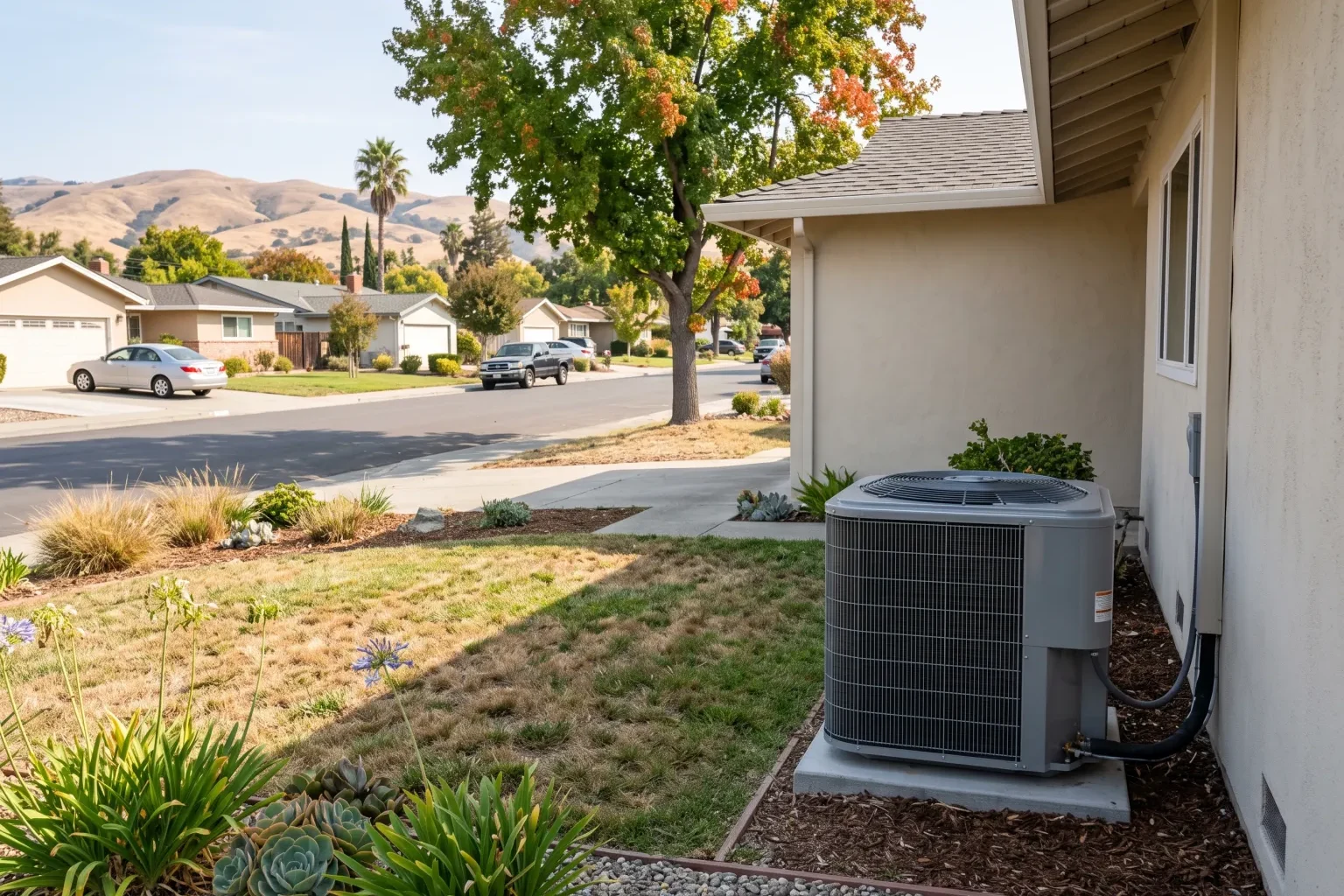
- Where the outdoor unit can go, with attention to airflow, noise and access
- Your current furnace or air handler and whether it pairs well with new cooling equipment
- Thermostat compatibility and any comfort problems you've noticed
Repair vs. Replace: Your Options
If your current AC can be repaired reliably, we'll tell you. A repair often makes sense when the system is relatively young, the problem is isolated, and it has otherwise cooled your home well.
Replacement usually makes more sense when repairs are frequent, the system is near the end of its life, or it was never sized correctly. When you replace, you can choose a standard central air conditioner or a heat pump, which provides both cooling and heating. A heat pump is worth considering in the Bay Area: under Bay Area Air District rules, gas furnaces manufactured from 2029 must meet a zero-NOx standard, which in practice points homeowners toward heat pumps. Those rules don't require you to replace working equipment. They only apply when a furnace fails or is replaced, but they're worth keeping in mind if your furnace is also getting older.
What Affects the Cost of AC Installation
Every installation is different, so we give you a written quote after we've seen your home. These are the main factors:
- System type: central AC, heat pump, or ductless mini-split
- Equipment capacity and efficiency level
- Whether ductwork needs repair, resealing, modification or new runs
- Electrical upgrades, such as panel capacity or a new circuit
- Placement of the indoor and outdoor units and how easy they are to reach
- Permits and any related work, such as a new thermostat or pad
- Available incentives. Bay Area homeowners can check BayREN and their local clean energy provider for heat pump programs. Offers change by funding cycle, so we confirm what's current before including it in a quote. Note that the federal 25C tax credit for heat pumps ended for systems placed in service after December 31, 2025.
How an Installation Visit Works
First, we visit your home to talk through your comfort concerns and complete the inspection described above. Next, we explain your options in plain terms and give you a written quote, with no pressure to decide on the spot. Once you choose a system, we schedule the installation, handle the permit, remove the old equipment, and install and connect the new system. Before we leave, we test the system, check airflow and temperatures, and show you how to use the thermostat and care for the equipment.